QNAP 4-Bay 10GbE Rackmount NAS Review (2026): A Spec-Based Look
As an Amazon Associate we earn from qualifying purchases. Links on this page are affiliate links.
This qnap ts 432pxu rp 2g 4 bay rackmount review examines a compact server designed for network-intensive environments. The unit features an AnnapurnaLabs Alpine AL324 quad-core processor running at 1.7GHz and includes 2GB of upgradable DDR4 RAM. Its defining characteristic is the dual 10GbE SFP+ ports, which provide high-speed connectivity for demanding data transfers. You also get two 2.5 GbE RJ45 ports for standard networking needs. The rackmount form factor allows for efficient use of space in server rooms. This setup prioritizes throughput and expandability over raw storage capacity, making it a specialized tool for specific infrastructure needs.
What stands out
- Two 10GbE SFP+ ports for high-bandwidth connectivity
- AnnapurnaLabs Alpine AL324 quad-core 1.7GHz processor
- 2GB UDIMM DDR4 RAM with expansion up to 16GB
- Rackmount design for space-efficient installation
Who it fits
Good fit for
This NAS suits IT professionals and small businesses that require dedicated 10GbE connectivity for file sharing, virtualization, or media streaming. The upgradable RAM allows you to run multiple containers or virtual machines efficiently. The rackmount form factor is ideal for those who already have server racks or want a tidy, professional installation. If your workflow relies on fast network transfers between devices and you need a reliable, expandable storage backbone, this model fits your technical requirements.
Who should skip it
Users looking for a simple home media server may find this unit too complex. The 4-bay capacity is limited compared to larger desktop models, restricting total storage potential. The base 2GB RAM might feel insufficient for heavy virtualization without immediate upgrades. Additionally, the rackmount design requires specific mounting hardware and space that typical home offices lack. If you need more drive slots or a simpler plug-and-play experience, a standard desktop NAS would be a better choice.
Verdict: This NAS delivers robust 10GbE performance and expandable RAM in a space-saving rackmount chassis. It is a practical choice for users who prioritize network speed and professional deployment over maximum storage capacity.
Key specs explained for this NAS
Processor: AnnapurnaLabs Alpine AL324 1.7GHz
This quad-core ARM processor handles background tasks like file indexing and virtual machine management. A 1.7GHz speed is adequate for small to medium business workloads. It ensures smooth operation when multiple users access files simultaneously. You benefit from consistent performance without needing a high-end desktop CPU. Compare this to faster x86 processors if you plan to run heavy containers or extensive backup jobs.
Network Connectivity: Two 10GbE SFP+, Two 2.5 GbE RJ45
Dual 10GbE ports allow for high-speed data transfers over fiber or copper. This is essential for video editing, large database access, or server-to-server replication. The two 2.5 GbE ports provide flexible connectivity for standard office networks. You can bond these ports for increased throughput or redundancy. Look for this feature if your current gigabit Ethernet is a bottleneck for your team.
RAM Capacity: 2GB UDIMM DDR4
The unit ships with 2GB of memory, which is the minimum for basic operations. It supports up to 16GB via an upgradeable slot. More RAM improves caching and allows for more simultaneous virtual machines or containers. You should plan to upgrade this immediately for serious use. Check compatibility with standard DDR4 modules when budgeting for necessary memory expansion.
Drive Bays: 4 Bay
Four drive slots offer flexibility for RAID configurations like RAID 1, 5, or 6. This setup balances storage capacity with data protection against drive failures. You can mix drive sizes to some extent, though uniform drives are recommended. This form factor suits users who need moderate storage without the footprint of an 8-bay unit. Consider your future growth needs when selecting the initial drive count.
Rackmount Design and Build Specs
According to the listing, the QNAP TS-432PXU-RP-2G uses a rackmount form factor. This design allows the unit to fit into standard server racks, making it suitable for data centers or dedicated IT rooms. The chassis is black and measures 5 inches in height. This compact vertical profile helps you save floor space while maintaining a professional appearance in a server environment. The build prioritizes durability and airflow for continuous operation.
The front layout includes four drive bays for your storage disks. You also have access to two 10GbE SFP+ ports and two 2.5 GbE RJ45 ports. These network interfaces are positioned for easy cable management in a rack. The presence of a PCIe Gen 2 x2 slot allows you to add expansion cards if needed. Four USB 3.2 Gen 1 ports are available for peripheral connections.
This physical setup supports high-throughput tasks. The rackmount style ensures stability and proper ventilation. You can stack multiple units if your storage needs grow. The design focuses on functionality rather than aesthetics. It is built for environments where noise and space are considerations. The 5-inch height keeps the unit low-profile yet accessible for maintenance.
Setup and daily operation specs
The rackmount form factor means you will install this unit in a standard server cabinet. This requires a dedicated space in your data center or IT room. The physical setup involves mounting the chassis and connecting power. You must also attach the network cables to the available ports. The listing specifies two 10GbE SFP+ ports and two 2.5 GbE RJ45 ports. You should connect the 10GbE ports to your high-speed network switches for maximum throughput. The 2.5 GbE ports offer flexibility for lower-bandwidth connections or backup links. For storage expansion, you have four drive bays. You can install standard 3.5-inch hard drives or 2.5-inch SSDs. The unit includes one PCIe Gen 2 x2 slot. You can use this slot to add additional network cards or other expansion modules if needed. Daily use relies on the AnnapurnaLabs Alpine AL324 processor. This quad-core ARM chip runs at 1.7GHz. It handles file indexing, user authentication, and background tasks. The system comes with 2GB of DDR4 RAM. You can upgrade this to a maximum of 16GB. More RAM allows you to run more simultaneous services or virtual machines without slowing down. The four USB 3.2 Gen 1 ports let you connect external drives for backups or media. The QNAP operating system manages these resources. It provides a web-based interface for configuration. You will monitor performance through this dashboard. The system is designed for continuous operation in a professional environment.
Key Considerations Before Buying
Before you buy this QNAP TS-432PXU-RP-2G, verify your rack space. The unit is a 4-bay rackmount chassis that requires standard server cabinet mounting. You must also check your network infrastructure. This NAS features two 10GbE SFP+ ports and two 2.5 GbE RJ45 ports. Ensure your switch supports these speeds to utilize the full bandwidth. The system includes 2GB of DDR4 RAM, which is expandable up to 16GB. You may need additional memory if you plan to run multiple virtual machines or heavy containerized applications. Consider purchasing compatible hard drives separately, as this model does not include pre-installed storage. The AnnapurnaLabs Alpine AL324 processor handles background tasks efficiently, but you should monitor system load if you intend to use it as a virtualization host. This device fits well in dedicated IT rooms or data centers. It is less suitable for home offices without rack space. Compare it with other options in our guide based on your specific connectivity and expansion needs.
Check before you buy
- Verify rack space availability for the 4-bay chassis.
- Ensure your network switch supports 10GbE SFP+ connections.
- Check if you need more than 2GB of RAM.
- Confirm you have compatible hard drives to install.
The product at a glance
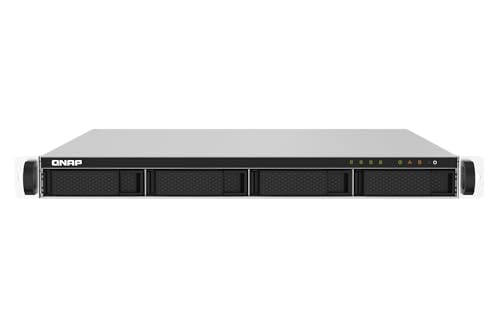
QNAP 4-Bay 10GbE Rackmount NAS
Best for: Rackmount setups requiring 10GbE connectivity
- Drive Bays
- 4 Bay
- Network Connectivity
- Two 10GbE, Two 2.5GbE
- Processor
- AnnapurnaLabs Alpine AL324
- RAM Capacity
- 2GB UDIMM DDR4
- Form Factor
- Rackmount
View on Amazon: QNAP 4-Bay 10GbE Rackmount NAS Affiliate link
This is a 4-bay rackmount NAS designed for professional environments. It features an AnnapurnaLabs Alpine AL324 quad-core 1.7GHz processor and 2GB of DDR4 RAM. The network setup includes two 10GbE SFP+ ports and two 2.5 GbE RJ45 ports. You get four USB 3.2 Gen 1 ports and one PCIe Gen 2 x2 slot. This unit suits users needing high-speed connectivity in a rackmount form factor.
Pros
- Two 10GbE SFP+ network ports for high-speed data transfer
- Two 2.5 GbE RJ45 ports for flexible connectivity
- AnnapurnaLabs Alpine AL324 quad-core 1.7GHz processor
- 4 USB 3.2 Gen 1 ports for peripheral access
- Rackmount form factor for server room integration
Cons
- Only 2GB of base RAM limits heavy multitasking
- Single power supply option reduces redundancy
- No mention of included hard drives in the base configuration
Good fit if
- You need 10GbE connectivity for fast local network transfers
- You require a rackmount chassis for your server setup
- You want multiple USB ports for peripheral expansion
Skip if
- You need more than 4 drive bays
- You require dual redundant power supplies
- You need more than 2GB of RAM without upgrading
Verdict: QNAP 4-Bay 10GbE Rackmount NAS offers robust networking for rack installations. It fits users who prioritize 10GbE speed and expandability over high base memory.
Specifications side by side
| Spec | QNAP 4-Bay 10GbE Rackmount NAS |
|---|---|
| Drive Bays | 4 Bay |
| Network Connectivity | Two 10GbE, Two 2.5GbE |
| Processor | AnnapurnaLabs Alpine AL324 |
| RAM Capacity | 2GB UDIMM DDR4 |
| Form Factor | Rackmount |
| Number of Bays | 4-Bay |
| Size | 4 Bay |
| Color | Black |
| Model | TS-432PXU-RP-2G-AM-US |
Frequently asked questions
What network ports does this QNAP NAS have?
The device features dual 10GbE SFP+ ports and two 2.5 GbE RJ45 ports. This configuration supports high-speed fiber connections for primary data transfer while offering standard copper Ethernet options for backup or secondary links. You should ensure your network infrastructure matches these specific port types for optimal performance.
Is the RAM in this unit upgradable?
Yes, the system includes 2GB of DDR4 RAM that is upgradable. This allows you to increase memory capacity to handle more complex tasks or virtual machines as your storage needs grow. Upgrading the RAM ensures the quad-core processor has sufficient resources for background indexing and multitasking.
What processor powers this 4-bay rackmount NAS?
It uses an AnnapurnaLabs Alpine AL324 quad-core processor running at 1.7GHz. This ARM-based CPU is designed to handle background tasks like file indexing and virtual machine management efficiently. The 1.7GHz speed provides adequate performance for small to medium business workloads without excessive power consumption.
Can I install this NAS in a standard server rack?
Yes, the unit features a rackmount form factor designed to fit into standard server racks. This makes it suitable for data centers or dedicated IT rooms where space efficiency is critical. The black chassis is built specifically for this mounting style, ensuring secure placement in your infrastructure.
How many hard drives can this NAS hold?
The NAS supports four hard drives in its 4-bay configuration. This allows you to balance capacity and redundancy using various RAID levels depending on your data importance. The 4-bay design provides flexibility for storing large volumes of data while maintaining the compact footprint required for rack installation.
Who is this NAS best suited for?
This device is best for users who prioritize 10GbE speed and expandability over high base memory. It is ideal for rackmount setups requiring robust networking capabilities. If you need high-speed data transfer in a dedicated server environment, this unit meets those specific technical requirements effectively.