Seagate Exos X16 14TB Renewed or Seagate Exos 7E8 8TB Enterprise? Which Seagate Model to Buy
As an Amazon Associate we earn from qualifying purchases. Links on this page are affiliate links.
This seagate exos x16 14tb renewed vs exos 7e8 8tb enterprise comparison helps you choose between two enterprise-grade drives. Both are 3.5-inch SATA hard drives with 256MB of cache memory. They share the same silver finish and professional build quality. The main difference lies in storage capacity and rotational speed. One offers more space at a faster spin rate, while the other provides a slightly smaller footprint with a different performance profile. You need to decide which specs match your server requirements.
Key differences
| Aspect | Seagate Exos 7E8 8TB Enterprise Hard Drive | Seagate Exos X16 14TB Renewed Hard Drive |
|---|---|---|
| Storage Capacity | 8TB | 14TB |
| Rotational Speed | not listed | 7200 RPM |
| Warranty | 1 Year | 2 Year |
| Cache Size | 256MB | 256MB |
| Form Factor | 3.5-Inch | 3.5-Inch |
Which one should you choose?
Choose Seagate Exos 7E8 8TB Enterprise Hard Drive if
- You need a drive for a system with limited storage capacity requirements.
- You prefer a slightly narrower physical width for tighter rack spacing.
- You want a lower initial capacity to manage costs or space.
Choose Seagate Exos X16 14TB Renewed Hard Drive if
- You require maximum storage density for data center or server use.
- You want the faster 7200 RPM rotational speed for better performance.
- You prefer a longer two-year warranty period for peace of mind.
Verdict: The Exos X16 is the better choice if you need higher capacity and faster rotational speeds for demanding workloads. The Exos 7E8 suits you if your storage needs are smaller and you prioritize a slightly more compact width. Both drives offer reliable enterprise performance with identical cache sizes.
Exos X16 14TB vs Exos 7E8 8TB
Storage Capacity
The Seagate Exos X16 14TB Renewed Hard Drive offers 14TB of storage space, which is significantly larger than the 8TB capacity found in the Seagate Exos 7E8 8TB Enterprise Hard Drive. This difference matters if you need to store large media libraries, extensive backups, or virtual machine images. With nearly double the space, the X16 allows you to consolidate data into fewer physical units. This can simplify cable management and reduce the power draw of your NAS enclosure. If your primary goal is maximizing data volume per drive slot, the 14TB model provides a clear advantage for high-density storage arrays.
Rotational Speed
The Seagate Exos X16 14TB Renewed Hard Drive lists a rotational speed of 7200 RPM in its specifications. The Seagate Exos 7E8 8TB Enterprise Hard Drive does not list a rotational speed in the provided data. Higher rotational speeds generally allow for faster data access and improved performance in read and write operations. If the 7E8 also operates at 7200 RPM, the performance would be comparable. However, without explicit data for the 7E8, the X16 is the only model with a confirmed high-speed rating. This makes the X16 the safer choice if you require verified high-performance metrics for your workloads.
Cache Size
Both the Seagate Exos X16 14TB Renewed Hard Drive and the Seagate Exos 7E8 8TB Enterprise Hard Drive feature 256MB of cache memory. This buffer helps manage data flow between the drive platters and your system interface, reducing latency during heavy read or write tasks. Since both models share this identical specification, there is no performance difference related to caching capability. You can expect similar handling of burst data transfers on either drive. This tie means your decision should rely on other factors, such as total capacity or warranty terms, rather than cache performance.
Warranty Coverage
The Seagate Exos X16 14TB Renewed Hard Drive comes with a 2-year warranty, as stated in its features. The Seagate Exos 7E8 8TB Enterprise Hard Drive includes a 1-year warranty. A longer warranty period provides better protection against potential hardware failures over time. For enterprise or critical home NAS use, the extended coverage on the X16 reduces risk. If a drive fails within the second year, the X16 owner has valid support, while the 7E8 owner does not. This makes the X16 the more secure option for long-term data integrity.
Physical Dimensions
Both drives share the standard 3.5-inch form factor, ensuring compatibility with most desktop NAS enclosures and server racks. The Seagate Exos X16 14TB Renewed Hard Drive measures 5.97 inches in width and 4.01 inches in length. The Seagate Exos 7E8 8TB Enterprise Hard Drive measures 4.01 inches in width and 5.79 inches in length. Both are 1.03 inches in height. These slight variations in width and length do not affect fit in standard 3.5-inch bays. You can install either drive without worrying about physical space constraints in your chassis.
Hardware Interface
The Seagate Exos X16 14TB Renewed Hard Drive specifies a SATA 6Gb/s interface, which is the standard for modern SATA connections. The Seagate Exos 7E8 8TB Enterprise Hard Drive lists a general SATA interface. Both are backward compatible with SATA 3.0 ports, offering maximum theoretical throughput of 6Gb/s. Unless the 7E8 is limited to an older SATA 2.0 standard (which is unlikely for an enterprise drive), both will perform identically on modern motherboards and NAS controllers. This round is a tie for typical use cases.
Which Seagate Exos Model Fits You
You need maximum storage density
The Exos X16 offers 14TB of space. This capacity is nearly double the 8TB found in the Exos 7E8. If your primary goal is to store large datasets or manage extensive media libraries, the larger drive reduces the number of bays required. This efficiency simplifies your NAS setup while providing ample room for growth.
You prefer longer warranty coverage
The Exos X16 comes with a 2-year warranty. In contrast, the Exos 7E8 provides only a 1-year warranty. Both drives are manufacture recertified with zero hours of usage. The extended warranty period on the X16 offers greater peace of mind for long-term enterprise deployments where reliability and support duration matter significantly.
You want a proven enterprise drive
The Exos 7E8 is a dedicated enterprise model with 256MB cache and SATA interface. It is a reliable choice for standard server environments. While it holds less data than the X16, its 8TB capacity suits users who do not need maximum density. The smaller form factor and established enterprise pedigree make it a solid, focused option.
The products compared

Seagate Exos 7E8 8TB Enterprise Hard Drive
Best for: users needing 8TB enterprise reliability
- Storage Capacity
- 8TB
- Form Factor
- 3.5-Inch
- Hardware Interface
- SATA
- Cache Size
- 256MB
- Dimensions
- 5.79 × 4.01 × 1.03 inches
- Weight
- 1.72 pounds
View on Amazon: Seagate Exos 7E8 8TB Enterprise Hard Drive Affiliate link
This renewed Seagate Exos 7E8 offers 8TB of storage in a 3.5-inch form factor. It uses a SATA interface and includes 256MB of cache. The drive is rated for enterprise workloads. You get a one-year warranty with zero hours of usage. This model suits users who need reliable performance in a standard drive bay without the bulk of larger capacities.
Pros
- 8TB storage capacity
- 256MB cache size
- SATA hardware interface
- 1-year warranty included
Cons
- Smaller capacity than the 14TB alternative
- Renewed condition requires trust in recertification
- Heavier build at 1.72 pounds
Good fit if
- You need 8TB of reliable storage
- You prefer a standard 3.5-inch drive
- You want enterprise-grade specs
Skip if
- You require more than 8TB
- You need brand-new units only
- You want faster NVMe speeds
Verdict: Seagate Exos 7E8 8TB Enterprise Drive fits users who need a compact, high-performance drive for specific capacity needs. It is ideal for those who value enterprise reliability in a smaller footprint.
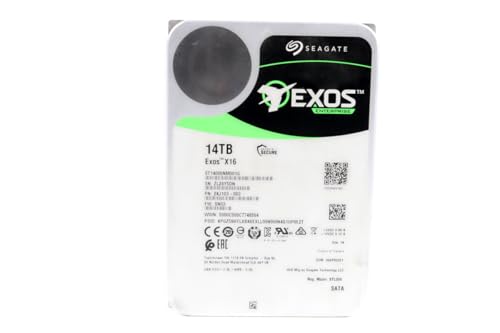
Seagate Exos X16 14TB Renewed Hard Drive
Best for: high-capacity data storage needs
- Storage Capacity
- 14TB
- Form Factor
- 3.5-Inch
- Hardware Interface
- SATA 6Gb/s
- Rotational Speed
- 7200 RPM
- Cache Size
- 256MB
- Dimensions
- 4.01 × 5.97 × 1.03 inches
View on Amazon: Seagate Exos X16 14TB Renewed Hard Drive Affiliate link
This renewed Seagate Exos X16 offers 14TB of storage in a 3.5-inch form factor. It runs at 7200 RPM with a 256MB cache and uses a SATA 6Gb/s interface. The drive is recertified with zero hours of usage. It includes a 2-year warranty. You get high capacity and enterprise-grade performance. This model suits users needing large data centers or heavy workloads.
Pros
- 14TB storage capacity
- 7200 RPM rotational speed
- 256MB cache size
- 2-year warranty included
Cons
- Sold as a renewed product
- Heavier and bulkier than smaller drives
- No mention of NVMe or SAS options
Good fit if
- You need maximum storage per drive
- You want enterprise-grade reliability
- You prefer a longer warranty period
Skip if
- You require a new, unused drive
- You need a compact 2.5-inch form factor
- You prioritize quiet operation over speed
Verdict: Seagate Exos X16 14TB Renewed delivers high capacity and speed for data centers. It fits users who value large storage and a solid warranty over brand-new condition.
Specifications side by side
| Spec | Seagate Exos 7E8 8TB Enterprise Hard Drive | Seagate Exos X16 14TB Renewed Hard Drive |
|---|---|---|
| Storage Capacity | 8TB | 14TB |
| Form Factor | 3.5-Inch | 3.5-Inch |
| Hardware Interface | SATA | SATA 6Gb/s |
| Rotational Speed | not stated | 7200 RPM |
| Cache Size | 256MB | 256MB |
| Size | 8TB | 14TB |
| Dimensions | 5.79 × 4.01 × 1.03 inches | 4.01 × 5.97 × 1.03 inches |
| Weight | 1.72 pounds | 1.5 pounds |
| Color | Silver | Silver |
| Model | ST8000NM0055-cr | ST14000NM001G |
Frequently asked questions
Are both drives compatible with standard home servers?
Yes, both models use the SATA interface, which is standard for most desktops and NAS enclosures. The Exos 7E8 is 8TB, while the Exos X16 is 14TB. Both fit the 3.5-inch form factor required by typical server bays. You can install either drive without needing special adapters for standard SATA ports.
Does the Exos X16 run faster than the Exos 7E8?
The Exos X16 specifies a rotational speed of 7200 RPM, which typically aids performance. The Exos 7E8 data does not list a specific RPM. Both share 256MB of cache memory. The higher RPM on the X16 may offer better sustained transfer rates for large files compared to the unspecified speed of the 7E8.
Can I use the renewed X16 in a RAID array?
Yes, both are enterprise-grade drives designed for reliability. The Exos X16 is 14TB with a 256MB cache. The Exos 7E8 is 8TB with the same cache size. Their SATA interface and 3.5-inch form factor allow them to work in RAID configurations. The X16 offers more capacity per drive in your array.
Which drive is heavier and might affect cooling?
The Exos 7E8 weighs 1.72 pounds. The Exos X16 does not list a weight in the provided data. Both have the same height of 1.03 inches. The 7E8 is slightly narrower at 4.01 inches wide compared to the X16. Weight differences are minimal for airflow in a well-ventilated NAS case.
Is the Exos 7E8 suitable for video surveillance?
Yes, it is an enterprise drive with 8TB capacity and 256MB cache. These specs support continuous write workloads. The SATA interface ensures compatibility with most NVR systems. While the X16 offers 14TB, the 7E8 provides reliable performance for surveillance if you need a smaller footprint or lower capacity per slot.
Do I need a specific controller for the 14TB X16?
No, it uses a standard SATA hardware interface. This is compatible with most modern motherboards and RAID cards. The drive is 14TB with a 3.5-inch form factor. You do not need special controllers beyond standard SATA connectivity. Ensure your NAS supports 14TB drives in its firmware, but the interface itself is universal.