TOSHIBA 16TB Enterprise 7200 RPM or TOSHIBA X300 5TB 7200 RPM? Which TOSHIBA Model to Buy
As an Amazon Associate we earn from qualifying purchases. Links on this page are affiliate links.
When comparing toshiba mg08aca16te 16tb 7200rpm 512e vs x300 5tb performance, you see two distinct drives. Both use 7200 RPM rotation and CMR recording for reliable data storage. They share the standard SATA 6 Gb/s interface and 3.5-inch form factor. The main difference lies in capacity and cache. The X300 offers 5 TB with 128 MB of cache, targeting desktop and gaming use. The MG08 provides 16 TB with 512 MB of cache, designed for enterprise environments.
Key differences
| Aspect | Toshiba X300 5TB 7200 RPM CMR Hard Drive | Toshiba 16TB Enterprise 7200 RPM Hard Drive |
|---|---|---|
| Storage Capacity | 5 TB | 16 TB |
| Cache Size | 128 MB | 512 MB |
| Workload Rating | not listed | 550 TB/year |
| Reliability | not listed | 2.5 million hours MTTF |
Which one should you choose?
Choose Toshiba X300 5TB 7200 RPM CMR Hard Drive if
- You need a drive for a gaming PC or high-end desktop workstation.
- You require a smaller 5 TB capacity with 128 MB of cache.
- You want a drive explicitly designed for consumer desktop use.
Choose Toshiba 16TB Enterprise 7200 RPM Hard Drive if
- You need massive 16 TB storage for enterprise or heavy data workloads.
- You require 512 MB of cache for sustained high throughput.
- You need a drive rated for 24/7 continuous operation with high annual workload limits.
Verdict: The X300 suits desktop users who need reliable 5 TB storage for gaming or general computing. The MG08 is the better choice for those requiring high capacity and enterprise-grade reliability. Your decision depends on whether you prioritize consumer desktop optimization or maximum storage and workload endurance.
Capacity and Cache Comparison
Storage Capacity
The Toshiba MG08ACA16TE offers 16 TB of storage, while the X300 provides 5 TB. The enterprise drive uses helium-sealed nine-platter technology to fit this massive space into a standard 3.5-inch form factor. This design allows for high density without increasing the physical footprint. The X300 uses conventional platters to reach its lower capacity. If you need to store large media libraries or enterprise datasets, the 16 TB model provides more than three times the space. The 5 TB drive is suitable for smaller gaming libraries or basic desktop backups. You choose based on how much data you actually need to keep on the device.
Cache Memory
Cache size impacts how quickly the drive can access frequently used data. The MG08ACA16TE includes 512 MiB of onboard cache. This larger buffer helps maintain sustained throughput, especially during heavy write operations. The X300 features a 128 MB cache. While this is sufficient for gaming and desktop workstations, it is significantly smaller than the enterprise model. The larger cache on the 16 TB drive supports its higher workload rating and continuous operation requirements. For users running multiple applications or virtual machines, the extra cache memory on the enterprise drive can reduce latency. The X300 remains capable for single-user desktop tasks.
Workload Rating
The MG08ACA16TE is rated for up to 550 TB/year of workload. This enterprise-grade specification means it is built for 24/7 operation in servers or storage arrays. The X300 is designed for gaming PCs and high-end desktop workstations, but it lacks a specific annual workload rating in the provided data. The enterprise drive includes features like rotational vibration sensors and persistent write cache to safeguard against power loss. These features support its high endurance. If you plan to run the drive continuously or store critical business data, the higher workload rating of the MG08 is a clear advantage. The X300 is better suited for intermittent desktop use.
Rotational Speed
Both drives operate at 7200 RPM. This rotational speed is standard for performance-oriented hard drives and ensures fast data access times compared to slower 5400 RPM models. Since both the Toshiba MG08ACA16TE and the X300 share this specification, there is no difference in rotational performance. The actual throughput may vary slightly due to cache size and platter density, but the base speed is identical. You will not gain or lose speed by choosing one over the other based on rotation alone. This aspect is a tie, as both drives provide the same foundational performance level for read and write operations.
Recording Technology
Both drives use Conventional Magnetic Recording (CMR) technology. CMR is preferred for reliability and compatibility in both enterprise and desktop environments. It avoids the potential performance penalties associated with Shingled Magnetic Recording (SMR). The MG08ACA16TE utilizes CMR to deliver broad application compatibility. The X300 also relies on CMR for stable performance in gaming and workstation scenarios. Since both products use the same recording method, you do not need to worry about compatibility issues with either drive. This technology ensures consistent write speeds and long-term data integrity for both models.
Hardware Interface
Both drives utilize the SATA 6.0 Gb/s interface. This standard connection is compatible with almost all modern desktops, workstations, and NAS systems. The X300 connects via SATA 6.0 GB/s, while the MG08ACA16TE also supports SATA 6 Gb/s. This means you can use either drive in the same systems without needing special adapters. The interface speed limits the maximum theoretical bandwidth for both drives equally. You will not see a difference in connection compatibility or bandwidth potential between the two models based on the interface alone.
Choose the right Toshiba drive for you
You need massive storage for servers or heavy workloads
The 16 TB capacity and 550 TB/year workload rating handle intensive enterprise tasks. Helium sealing and vibration sensors ensure stability during continuous 24/7 operation. The 512 MiB cache supports high throughput for large data transfers. This drive is built for reliability in demanding environments where uptime and density matter most.
You want a reliable drive for gaming or desktop use
This 5 TB drive is designed for gaming PCs and desktop workstations. The 128 MB cache and 7200 RPM speed provide responsive performance for real-time read and write tasks. It includes a two-year limited warranty and uses TMR recording technology for improved stability. It fits standard 3.5-inch bays for easy installation.
You prioritize high cache speed for performance
With 512 MiB of onboard cache, this enterprise drive offers significantly more buffer space than the 128 MB found in the X300. This larger cache aids in managing data flow and sustaining high throughput speeds. The persistent write cache also helps protect data during sudden power loss, making it ideal for critical applications.
The products compared
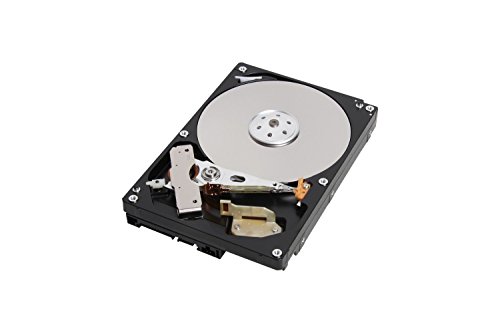
Toshiba X300 5TB 7200 RPM CMR Hard Drive
Best for: Gaming PCs and desktop workstations
- Storage Capacity
- 5 TB
- Form Factor
- 3.5-Inch
- Hardware Interface
- SATA 6.0 GB/s
- Rotational Speed
- 7200 RPM
- Cache Size
- 128 MB
- Recording Technology
- CMR
View on Amazon: Toshiba X300 5TB 7200 RPM CMR Hard Drive Affiliate link
This 5 TB drive targets gaming PCs and high-end desktops. It spins at 7200 RPM with 128 MB of cache and uses CMR recording. The SATA 6.0 GB/s interface ensures fast data transfer. You get reliable performance for large libraries. The 3.5-inch form factor fits standard desktop bays. It includes a two-year limited warranty.
Pros
- 7200 RPM rotational speed for consistent performance
- 128 MB cache buffer for real-time read/write
- CMR recording technology for data stability
- SATA 6.0 GB/s interface
Cons
- 5 TB capacity is much lower than the 16 TB MG08 model
- Only a 2-year limited warranty
- Heavier build at 1 pound
Good fit if
- You need a drive specifically for gaming libraries
- You prefer a smaller 5 TB capacity
- You want CMR technology in a desktop drive
Skip if
- You require 16 TB of storage space
- You need an enterprise-grade warranty
- You are building a high-density NAS
Verdict: Toshiba X300 5TB 7200 RPM suits gamers and desktop users who prioritize speed over massive capacity. It is not suitable if you need the 16 TB storage of the MG08 model.

Toshiba 16TB Enterprise 7200 RPM Hard Drive
Best for: high-capacity enterprise and heavy home storage
- Storage Capacity
- 16 TB
- Form Factor
- 3.5"
- Hardware Interface
- SATA 6 Gb/s
- Rotational Speed
- 7200 RPM
- Cache Size
- 512 MiB
- Recording Technology
- CMR
View on Amazon: Toshiba 16TB Enterprise 7200 RPM Hard Drive Affiliate link
This 16 TB drive uses CMR recording and spins at 7200 RPM. It includes 512 MiB of cache and a 550 TB/year workload rating. The helium-sealed nine-platter design fits in standard 3.5-inch bays. You get sustained throughput near 262 MiB/s. It suits users who need high capacity and continuous reliability for enterprise or heavy home use.
Pros
- 16 TB storage capacity using CMR technology
- 7200 RPM rotational speed with 512 MiB cache
- Helium-sealed nine-platter design for efficiency
- 550 TB/year workload rate limit
Cons
- Heavy 1.32-pound build requires sturdy mounting
- Higher power draw than lower-capacity drives
- No included mounting brackets or cables
Good fit if
- You need maximum storage in a single drive
- You run servers or heavy workloads daily
- You prefer CMR over SMR for reliability
Skip if
- You have limited space in a small case
- You need quiet operation for a bedroom
- You only store small amounts of data
Verdict: Toshiba 16TB Enterprise 7200 RPM delivers massive capacity and endurance for users who prioritize storage density and continuous operation over quiet performance.
Specifications side by side
| Spec | Toshiba X300 5TB 7200 RPM CMR Hard Drive | Toshiba 16TB Enterprise 7200 RPM Hard Drive |
|---|---|---|
| Storage Capacity | 5 TB | 16 TB |
| Form Factor | 3.5-Inch | 3.5" |
| Hardware Interface | SATA 6.0 GB/s | SATA 6 Gb/s |
| Rotational Speed | 7200 RPM | 7200 RPM |
| Cache Size | 128 MB | 512 MiB |
| Recording Technology | CMR | CMR |
| Workload Rate Limit | not stated | up to 550 TB/year |
| Dimensions | 5.79 × 4 × 1.03 inches | 5.8 × 4 × 1 inches |
| Weight | 1 pounds | 1.32 pounds |
| Size | 5 TB | 16TB |
| Color | Silver | Silver |
| Model | HDWE150XZSTA | MG08ACA16TE |
Frequently asked questions
Is the Toshiba MG08 16TB drive suitable for a home NAS?
It can work, but it is designed for enterprise environments. The drive prioritizes massive capacity and endurance over quiet operation. You should expect higher noise levels and heat output compared to desktop models. It is best for heavy home storage setups where continuous operation is required.
Does the Toshiba X300 5TB use CMR or SMR technology?
The Toshiba X300 uses CMR technology. This recording method ensures stable write speeds and better performance during large file transfers. It avoids the slowdowns often associated with SMR drives, making it a reliable choice for gaming PCs and desktop workstations that need consistent throughput.
What is the cache size difference between the two drives?
The Toshiba X300 5TB features a 128MB cache. The provided data does not list the cache size for the 16TB Enterprise model. Cache helps buffer data before writing to the platters. A larger cache can improve performance when handling many small files or complex tasks.
Can I use the 16TB Enterprise drive in a standard desktop PC?
Yes, it uses the standard SATA interface and 3.5-inch form factor. However, it is optimized for enterprise use. You may experience higher noise and vibration levels. It is heavier, weighing 1.32 pounds compared to the 1-pound X300. Ensure your case has adequate ventilation for continuous operation.
Which drive is better for gaming and desktop workstations?
The Toshiba X300 5TB is the better choice for these uses. It is specifically recommended for gaming PCs and desktop workstations. It offers sufficient speed with 7200 RPM rotation and CMR recording. The 16TB Enterprise drive is overkill and less suitable for typical desktop gaming scenarios.
How do the physical dimensions compare for the two models?
Both drives share similar width and length dimensions. The X300 is 5.79 inches long and 1.03 inches high. The 16TB Enterprise drive is 5.8 inches long and 1 inch high. The size difference is minimal, so they fit in most standard 3.5-inch drive bays without issue.