NAS Hard Drives Buying Guide (2026): What Matters and 8 Picks
As an Amazon Associate we earn from qualifying purchases. Links on this page are affiliate links.
This NAS hard drive buying guide helps you select the right storage for your network-attached system. You will decide between capacity, rotational speed, and cache size based on your specific workload. We evaluated eight drives strictly by their published specifications to ensure objective comparisons. The list includes options for low-capacity media servers, high-density enterprise arrays, and continuous 24/7 business storage. Each pick is ranked by how well its technical attributes match common NAS use cases.
You need to understand how form factor, interface, and workload ratings impact reliability. We explain why 7200 RPM drives suit performance needs while helium-sealed models help with density. Cache size influences data handling efficiency, and SATA connectivity remains the standard for compatibility. After reading, you can confidently choose a drive that fits your bay size and performance requirements. The following recommendations highlight drives that balance capacity, speed, and endurance for various NAS configurations.
Our top pick: Western Digital AV-GP 1TB 3.5-Inch Hard Drive.
Key Specs for NAS Drives
Rotational speed and performance
Rotational speed, measured in RPM, directly affects how quickly your NAS retrieves data. Most NAS drives spin at 7200 RPM, offering faster access times than standard desktop drives. Higher speeds reduce latency for frequent read/write tasks, which is critical for active media servers or database applications. However, 7200 RPM drives generate more heat and vibration, requiring robust mounting in multi-bay enclosures. If your workload involves large, sequential transfers like video editing, 7200 RPM provides the necessary throughput. For quiet, low-power storage of archives, lower speeds may suffice. You should match the RPM to your activity level. For example, the Toshiba 14TB Enterprise drive offers 7200 RPM for high-demand arrays.
- 7200 RPM for active workloads
- Lower RPM for quiet storage
- Check manufacturer RPM rating
Form factor and drive size
The physical dimensions of the drive determine compatibility with your NAS chassis. Almost all NAS drives use a 3.5-inch form factor, which fits standard desktop and enterprise enclosures. This size allows for larger platters, enabling higher capacities in a single unit. You must ensure your NAS supports 3.5-inch bays, as some compact or portable units only accept 2.5-inch drives. The 3.5-inch size also provides better stability against vibration in multi-drive setups. If you are building a dense storage array, standard 3.5-inch drives are the norm. Verify the width and height of your drive bays before purchasing. All drives in this guide, including the Western Digital AV-GP, use the standard 3.5-inch format.
- Standard 3.5-inch size
- Check NAS bay compatibility
- Verify width and height
Cache size and buffering
Cache memory acts as a buffer between the drive’s platters and your system’s RAM. A larger cache, typically ranging from 64MB to 256MB in NAS drives, improves performance during random read/write operations. It allows the drive to queue commands efficiently, reducing latency when multiple users access files simultaneously. Drives with 256MB cache, like the Seagate Exos 7E8, handle complex workloads better than those with 64MB. While cache does not increase total capacity, it smooths out data transfer spikes. You should prioritize higher cache sizes for busy networks or RAID arrays. For light personal use, lower cache sizes may be adequate. Always check the cache specification in the product details.
- 256MB cache for heavy use
- 64MB cache for light tasks
- Check cache size in specs
Hardware interface and connectivity
The interface determines how the drive connects to your NAS motherboard. SATA is the standard interface for nearly all internal NAS drives, providing reliable data transfer and power delivery. You will find SATA III ports on modern NAS enclosures, supporting high bandwidth for fast drives. Ensure your NAS has available SATA ports for each drive you plan to install. The interface also affects compatibility with older systems, as SATA is backward compatible. All drives listed, including the MDD 14TB, use SATA interfaces. You do not need to worry about proprietary connectors. Just verify that your NAS supports the standard SATA connection type for seamless integration.
- SATA interface standard
- Check available SATA ports
- Ensure backward compatibility
Capacity and storage needs
Capacity dictates how much data you can store on a single drive. NAS drives range from 1TB to 14TB or more, allowing you to scale your storage pool. Higher capacities reduce the number of drives needed, simplifying cable management and power usage. However, larger drives cost more per terabyte and take longer to rebuild in case of failure. You should estimate your current and future data growth to choose the right size. For example, the Western Digital AV-GP 1TB suits light media servers, while the Toshiba 14TB fits dense arrays. Balance capacity with your budget and NAS slot availability. Avoid over-provisioning unless you have a clear expansion plan.
- Estimate current and future needs
- Balance capacity with budget
- Check available drive slots
Reliability and workload rating
NAS drives are built for 24/7 operation and higher workload ratings than desktop drives. They feature vibration sensors and firmware optimized for RAID environments. Enterprise-grade drives, like the Seagate Exos series, often carry higher annual workload ratings, meaning they can handle more data per year without failure. This reliability is crucial for business NAS systems or critical data storage. You should look for drives marketed for NAS or enterprise use, as they undergo stricter testing. The Western Digital RE drive is designed for continuous 24x7 operation. Avoid standard desktop drives in multi-bay NAS enclosures, as they may fail prematurely due to vibration and heat.
- 24/7 operation design
- High workload rating
- NAS or enterprise classification
Types of NAS Drives
Low-Capacity NAS Drives
These drives offer modest storage for light workloads. The Western Digital AV-GP 1TB model provides baseline 24/7 reliability with lower power consumption. Its 64MB cache suits modest network storage or media recording setups. You should choose this type if you need a small footprint for basic file sharing. The main trade-off is limited capacity. It is not suitable for large media libraries or heavy data archives. This category focuses on energy efficiency and consistent uptime for simple tasks rather than high throughput.
Mid-Capacity Enterprise Drives
Mid-capacity enterprise drives balance performance and storage volume. The Western Digital RE 4TB and Seagate Exos 7E8 6TB models deliver continuous 24x7 operation. They feature 7200 RPM speeds and larger caches, such as 256MB, for reliable business NAS use. These drives support higher workload ratings, ensuring stability under constant access. You should select this type for moderate network storage demands. The trade-off involves higher power usage and heat generation compared to lower-capacity options. They provide robust throughput for standard enterprise storage needs.
High-Capacity Enterprise Drives
High-capacity drives are built for dense NAS configurations. The Toshiba 14TB and Seagate Exos X14 14TB models offer significant storage using helium sealing for efficiency. They maintain 7200 RPM speeds and large 256MB caches for fast data retrieval. These drives are ideal for multi-bay arrays and data centers. You should choose this type if you prioritize maximum storage density. The trade-off is increased weight and potential vibration in crowded enclosures. They require robust cooling and may come in renewed conditions to manage costs, focusing on raw capacity and sustained performance.
Common Mistakes to Avoid
Ignoring vibration resistance features
NAS drives operate in enclosed enclosures with multiple units. Standard desktop drives lack vibration sensors and compensation algorithms. This causes performance drops and increased wear. Select drives with specific NAS-rated vibration tolerance to maintain stability and longevity in your multi-bay system.
Overlooking warranty terms for NAS use
Not all hard drives are covered for 24/7 network operation. Standard desktop warranties may void if used in a NAS enclosure. Check the manufacturer specifications carefully. Ensure the drive explicitly supports continuous operation and carries a warranty valid for your specific NAS deployment.
Mixing different drive models in RAID
Combining drives with varying capacities or speeds creates bottlenecks. Your RAID array will perform at the speed of the slowest unit. Mismatched drives also complicate rebuilds after failure. Use identical models with the same firmware and capacity to ensure uniform performance and reliability.
Choosing high RPM for silent homes
7200 RPM drives generate more noise and heat than 5400 RPM models. If your NAS sits in a living area, this noise is disruptive. Higher speeds also increase power consumption. For media libraries and backups, lower RPM drives offer sufficient performance with quieter operation.
Neglecting cache size for write tasks
Cache memory buffers write operations to improve speed. Small caches cause frequent pauses during large file transfers. For heavy write workloads, look for larger cache sizes like 256MB or more. This spec helps maintain consistent throughput when writing data to your network storage.
Quick picks
Our 8 picks

Western Digital AV-GP 1TB 3.5-Inch Hard Drive
Best for: low-capacity 24/7 NAS and media servers
- Storage Capacity
- 1TB
- Form Factor
- 3.5in
- Hardware Interface
- SATA 6Gb/s
- Rotational Speed
- 5400RPM~7200RPM
- Cache Size
- 64MB
- Dimensions
- 4.8 × 4 × 1 inches
View on Amazon: Western Digital AV-GP 1TB 3.5-Inch Hard Drive
The Western Digital AV-GP 1TB 3.5-Inch Hard Drive provides entry-level network storage designed for continuous 24/7 operation. It features a 1TB storage capacity, a 64MB cache, and IntelliPower rotation speed between 5400 RPM and 7200 RPM over a SATA 6Gb/s interface. If you need a drive for network storage, media servers, or surveillance video recording that operates continuously with lower power consumption, this 3.5-inch drive fits your setup.
Pros
- Built for 24/7 continuous operation in NAS and surveillance systems
- SATA 6Gb/s interface with 64MB cache
- IntelliPower variable rotation speed between 5400 RPM and 7200 RPM
Cons
- Limited 1TB storage capacity
- Comes as a bulk pack without cables or accessories
Good fit if
- You need a dedicated drive built for 24/7 network storage or media center operation.
- You only require 1TB of storage for light NAS duties or video recording.
Skip if
- You require storage capacity greater than 1TB for large file archives.
- You need SATA cables or installation accessories included in the box.
Verdict: Western Digital AV-GP 1TB 3.5-Inch Hard Drive delivers baseline 24/7 reliability and lower power consumption for light storage duties. Its 1TB capacity and 64MB cache suit modest network storage or media recording setups.

Toshiba 14TB Enterprise 7200 RPM HDD (Renewed)
Best for: high-capacity multi-bay NAS storage arrays
- Storage Capacity
- 14TB
- Form Factor
- 3.5"
- Hardware Interface
- SATA 6.0Gb/s
- Rotational Speed
- 7200RPM
- Cache Size
- 256MB
- Dimensions
- 7.5 × 5.5 × 2.5 inches
View on Amazon: Toshiba 14TB Enterprise 7200 RPM HDD (Renewed)
This Toshiba drive gives you 14TB of high-density storage using a nine-disk helium-sealed design. It operates at 7200 RPM with a 256MB cache over a standard SATA 6.0Gb/s interface. The unit features 512e persistent write cache technology to safeguard data. It suits you if you need large storage capacity for a multi-bay network attached storage system running demanding workloads.
Pros
- 14TB storage capacity with 9-disk helium-sealed design
- 7200 RPM rotational speed for rapid data access
- 256MB cache buffer
- SATA 6.0Gb/s interface support
Cons
- Renewed product condition rather than brand new
- Standard 3.5-inch size is unsuitable for compact 2.5-inch drive slots
Good fit if
- You need 14TB of capacity in a single 3.5-inch drive bay.
- You require 7200 RPM speed combined with a 256MB cache.
- You operate a NAS setup that accepts standard SATA 6.0Gb/s connections.
Skip if
- You want brand-new hardware rather than a renewed drive.
- You need a smaller 2.5-inch form factor drive.
Verdict: Toshiba 14TB Helium Enterprise Hard Drive provides high-capacity 7200 RPM storage backed by a 256MB cache and helium sealing. It delivers robust SATA connectivity for dense NAS configurations.
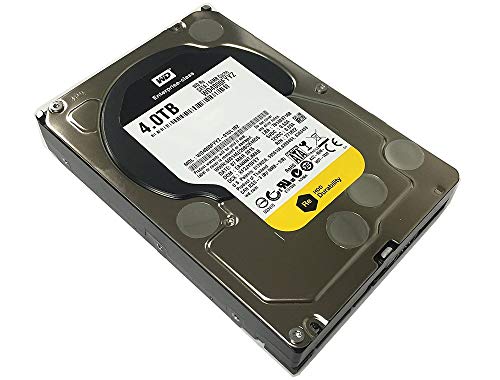
Western Digital RE 4TB 7200 RPM Hard Drive
Best for: continuous 24x7 mid-capacity network storage
- Storage Capacity
- 4TB
- Form Factor
- 3.5in
- Hardware Interface
- SATA 6.0Gb/s
- Rotational Speed
- 7200 RPM
- Cache Size
- 64MB
- Dimensions
- 9.3 × 5.4 × 3.7 inches
This Western Digital enterprise drive provides 4TB of storage on a 3.5-inch SATA 6.0Gb/s interface. It runs at 7200 RPM and includes a 64MB cache alongside a dual-processor design. The drive delivers sustained sequential transfer rates up to 171 MB/s and carries a 1.2 million hour MTBF rating for 24x7 operation. You will find it suits mid-capacity network storage setups running continuous, business-critical write duties.
Pros
- 7200 RPM spindle speed for active workloads
- 1.2 million hour MTBF rated for 24x7 continuous operation
- Sustained sequential transfer speeds up to 171 MB/s
- Dual-processor architecture
Cons
- 64MB cache is smaller than modern 256MB alternatives
- 4TB capacity is limited compared to larger enterprise models
- Warranty is 3 years through the reseller rather than manufacturer
Good fit if
- You need a 7200 RPM 3.5-inch SATA drive for 24x7 continuous operation.
- You require moderate 4TB capacity for business-critical storage tasks.
Skip if
- You require more than 4TB of capacity in a single drive bay.
- You need a drive with a cache larger than 64MB.
Verdict: Western Digital 4TB Enterprise 7200 RPM Hard Drive delivers reliable 24x7 operation and 171 MB/s sustained throughput for standard enterprise storage. Its 64MB cache and 4TB capacity make it best suited for moderate network storage demands.

Seagate Exos 7E8 6TB Enterprise Drive
Best for: continuous 24x7 business NAS storage up to 6TB
- Storage Capacity
- 6TB
- Form Factor
- 3.5-Inch
- Hardware Interface
- SATA
- Cache Size
- 256MB
- Workload Rate Limit
- 550TB per year
- Dimensions
- 5.79 × 4.01 × 1.03 inches
This Seagate Exos 7E8 is a renewed 3.5-inch enterprise SATA hard drive built for 24x7 storage environments. You get 6TB of storage capacity alongside a 256MB cache and a workload rate limit of 550TB per year. It features a 2 million hour MTBF rating for business-centric NAS systems and servers. This unit suits you if your multi-bay NAS setup requires heavy application usage and continuous operation at a mid-range capacity tier.
Pros
- Workload rate limit of 550TB per year
- 256MB cache size
- 2 million hour MTBF rating for 24x7 operation
Cons
- Renewed condition rather than brand new factory stock
- 6TB capacity is smaller than higher-capacity enterprise alternatives
Good fit if
- You need a drive rated for continuous 24x7 enterprise NAS operation.
- You run heavy workloads requiring up to 550TB per year throughput.
- You want 6TB capacity with a 256MB cache for a business storage system.
Skip if
- You need larger individual drives such as 10TB, 14TB, or 16TB models.
- You prefer brand-new factory-sealed hardware over renewed units.
Verdict: Seagate Exos 7E8 6TB Enterprise SATA Drive delivers an enterprise-grade 550TB per year workload rating and 256MB cache for continuous business NAS operation. It provides reliable 24x7 operation if 6TB meets your storage pool requirements.

Seagate Exos X14 14TB Renewed Enterprise HDD
Best for: Enterprise storage requiring high capacity
- Storage Capacity
- 14TB
- Form Factor
- 3.5-Inch
- Hardware Interface
- SATA 6Gb/s
- Rotational Speed
- 7200RPM
- Dimensions
- 5.8 × 4 × 1 inches
- Weight
- 1.5 pounds
View on Amazon: Seagate Exos X14 14TB Renewed Enterprise HDD
This is a 14TB 3.5-inch hard drive with a 7200RPM rotational speed and SATA 6Gb/s interface. It belongs to the Exos X14 line and weighs 1.5 pounds. The unit is manufacturer recertified with zero hours of usage. It includes a one-year seller warranty. You should use this drive for high-capacity storage needs in enterprise environments where reliability and speed are important.
Pros
- 14TB storage capacity
- 7200RPM rotational speed
- SATA 6Gb/s interface
- Manufacturer recertified with zero usage hours
Cons
- Sold as a renewed item
- Includes only a one-year seller warranty
- No mention of vibration sensors
Good fit if
- You need high-capacity storage for enterprise use
- You prefer manufacturer recertified drives
- You require 7200RPM performance
Skip if
- You need a new drive with a full manufacturer warranty
- You are looking for a desktop drive with lower power consumption
- You prefer drives with vibration sensors
Verdict: Seagate Exos X14 14TB Enterprise Drive offers high capacity and speed for enterprise users who accept renewed condition. It suits those prioritizing performance and capacity over a new unit warranty.

MFerraz 6TB Enterprise 7200 RPM Hard Drive
Best for: NAS systems needing 7200 RPM reliability
- Storage Capacity
- 6TB
- Form Factor
- 3.5-Inch
- Hardware Interface
- SATA 6Gb/s
- Rotational Speed
- 7200 RPM
- Cache Size
- 256MB
- Dimensions
- 5.8 × 4 × 1 inches
This 6TB hard drive uses a 7200 RPM spindle and 256MB cache for consistent performance. It features a SATA 6Gb/s interface and 3.5-inch form factor. The drive is built for 24/7 operation in NAS and server environments. You get reliable data storage for business files or media libraries. The enterprise-grade components support RAID arrays and multi-drive systems with enhanced vibration tolerance.
Pros
- 7200 RPM rotational speed
- 256MB cache size
- SATA 6Gb/s interface
- Optimized for RAID arrays
Cons
- Smaller 6TB capacity compared to 14TB or 16TB options
- Renewed condition rather than new
- Heavier build at 1 pound
Good fit if
- You need enterprise reliability for 24/7 operation
- You are building a RAID array
- You want fast 7200 RPM performance
Skip if
- You require the highest available capacity
- You prefer new condition drives
- You need a smaller 3.5-inch form factor
Verdict: MFerraz 6TB 7200RPM Enterprise HDD fits users who prioritize consistent speed and vibration tolerance in multi-drive systems. It is a solid choice for NAS setups requiring enterprise-grade components.

MDD 14TB 7200RPM NAS Hard Drive
Best for: NAS systems and RAID arrays
- Storage Capacity
- 14TB
- Form Factor
- 3.5-inch
- Hardware Interface
- SATA 6.0Gb/s
- Rotational Speed
- 7200 RPM
- Cache Size
- 256MB
- Dimensions
- 5.8 × 4 × 1 inches
The MDD 14TB drive offers high-density storage for NAS systems and data centers. It features a 7200 RPM rotational speed and 256MB cache for fast data access. The 3.5-inch form factor fits standard bays. It supports SATA 6.0Gb/s interfaces. This drive is suitable for desktop PCs, RAID systems, and surveillance setups. You get a bare drive without accessories.
Pros
- 14TB capacity for large storage needs
- 7200 RPM rotational speed
- 256MB cache for improved performance
- SATA 6.0Gb/s interface
Cons
- Bare drive only with no cables or screws
- Requires formatting to be detected by the system
- No mention of vibration resistance technology
Good fit if
- You need high-capacity storage for a NAS
- You want fast data access with 7200 RPM
- You are building a RAID system
Skip if
- You need a drive with pre-installed operating system
- You prefer a drive with included accessories
- You require a smaller 2.5-inch form factor
Verdict: MDD 14TB 7200RPM NAS Hard Drive fits users needing large, fast storage for NAS or RAID setups. It is a practical option for data centers and surveillance systems.

Seagate Enterprise 4TB Internal Hard Drive
Best for: NAS systems needing 7200RPM reliability
- Storage Capacity
- 4TB
- Form Factor
- 3.5"
- Hardware Interface
- SATA 6Gbps
- Rotational Speed
- 7200RPM
- Cache Size
- 128 MB
- Dimensions
- 5.87 × 4.01 × 1.03 inches
This Seagate drive offers 4TB of storage in a 3.5-inch form factor. It spins at 7200RPM and includes 128MB of cache. The SATA 6Gbps interface supports heavy-duty use. It is designed for 24/7 operation in NAS, RAID, or server environments. You get reliable performance for continuous data access. This model suits users needing enterprise-grade durability.
Pros
- 7200RPM rotational speed for consistent performance
- 128MB cache for data buffering
- SATA 6Gbps interface for fast transfers
- Designed for 24/7 heavy-duty use
Cons
- Smaller 4TB capacity compared to 14TB or 16TB options
- Lower 128MB cache compared to 256MB competitors
- Only 5-year warranty from reseller
Good fit if
- You need enterprise-grade reliability for 24/7 operation
- You are building a NAS or RAID array
- You require 7200RPM performance for servers
Skip if
- You need maximum storage density like 14TB drives
- You prefer larger cache sizes for buffering
- You want a longer manufacturer warranty
Verdict: Seagate 4TB Enterprise HDD is a solid choice for users prioritizing rotational speed and cache size in a compact capacity. It fits well in NAS systems where 24/7 reliability is critical.
Specifications side by side
| Spec | Western Digital AV-GP 1TB 3.5-Inch Hard Drive | Toshiba 14TB Enterprise 7200 RPM HDD (Renewed) | Western Digital RE 4TB 7200 RPM Hard Drive | Seagate Exos 7E8 6TB Enterprise Drive | Seagate Exos X14 14TB Renewed Enterprise HDD | MFerraz 6TB Enterprise 7200 RPM Hard Drive | MDD 14TB 7200RPM NAS Hard Drive | Seagate Enterprise 4TB Internal Hard Drive |
|---|---|---|---|---|---|---|---|---|
| Storage Capacity | 1TB | 14TB | 4TB | 6TB | 14TB | 6TB | 14TB | 4TB |
| Form Factor | 3.5in | 3.5" | 3.5in | 3.5-Inch | 3.5-Inch | 3.5-Inch | 3.5-inch | 3.5" |
| Hardware Interface | SATA 6Gb/s | SATA 6.0Gb/s | SATA 6.0Gb/s | SATA | SATA 6Gb/s | SATA 6Gb/s | SATA 6.0Gb/s | SATA 6Gbps |
| Rotational Speed | 5400RPM~7200RPM | 7200RPM | 7200 RPM | not specified | 7200RPM | 7200 RPM | 7200 RPM | 7200RPM |
| Cache Size | 64MB | 256MB | 64MB | 256MB | not specified | 256MB | 256MB | 128 MB |
| Workload Rate Limit | not specified | not specified | not specified | 550TB per year | not specified | not specified | not specified | not specified |
| Size | 1 TB | not specified | 4 TB | 6TB | not specified | 8.90 x 6.00 x 2.90 Inches" | not specified | 4 TB |
| Dimensions | 4.8 × 4 × 1 inches | 7.5 × 5.5 × 2.5 inches | 9.3 × 5.4 × 3.7 inches | 5.79 × 4.01 × 1.03 inches | 5.8 × 4 × 1 inches | 5.8 × 4 × 1 inches | 5.8 × 4 × 1 inches | 5.87 × 4.01 × 1.03 inches |
| Weight | not specified | 1.5 pounds | 1 pounds | not specified | 1.5 pounds | 1 pounds | 1.5 pounds | 1.54 pounds |
| Color | Silver | Silver | Silver | Silver | Silver | not specified | Silver | silver |
| Model | WD10EURX-OEM-2YR-cr | MG07ACA14TE | WD4000FYYZ OEM-cr | ST6000NM0115 | Exos X14 | ST6000NM0115 | MD14TSATA25672NAS/5YR | ST4000NM0033-cr |
If you are also shopping for audio hardware, the earbud buying guide covers driver specifications and battery life.
Frequently asked questions
Is 7200 RPM necessary for a NAS drive?
It depends on your workload. Drives like the Toshiba 14TB and Seagate Exos X14 spin at 7200 RPM for faster data retrieval. This speed reduces latency for frequent read and write tasks. However, lower-capacity options like the Western Digital AV-GP operate with lower power consumption. You should choose based on whether speed or efficiency matters more to you.
How much cache memory do I need?
Cache size impacts how quickly the drive buffers data. Higher-end models like the Seagate Exos 7E8 and MDD 14TB include 256MB of cache. This supports continuous business operations and dense storage arrays. Smaller drives, such as the Western Digital RE 4TB, use 64MB cache. This is sufficient for moderate network storage demands and light media recording setups.
Can I use enterprise hard drives in a home NAS?
Yes, enterprise drives are built for 24/7 reliability. The Seagate Exos 7E8 offers a 550TB per year workload rating. This ensures stable performance in multi-bay systems. Drives like the MFerraz 6TB provide vibration tolerance for dense configurations. You gain robust SATA connectivity and consistent speed, which benefits home users running RAID arrays or surveillance systems.
What is the difference between Helium and air-filled drives?
Helium sealing reduces internal friction and power consumption. The Toshiba 14TB Enterprise drive uses this technology for dense NAS configurations. It helps maintain temperature stability in enclosed enclosures. Most other listed drives, like the Western Digital AV-GP, do not mention helium sealing. You should check the product attributes to see if this feature is included for your specific setup.
Which drive is best for a 2-bay NAS?
For two drives, capacity and balance matter. The Western Digital AV-GP 1TB suits light storage duties with low power use. The Seagate Enterprise 4TB offers 7200 RPM reliability for critical data. If you need more space, the MDD 14TB provides large storage for RAID setups. Choose based on whether you prioritize modest capacity or high-volume data retention for your specific network needs.
Do I need a specific interface for my NAS?
All listed drives use the SATA hardware interface. This standard connection ensures compatibility with most NAS enclosures. You do not need to worry about proprietary connectors. The consistent SATA interface allows you to mix brands like Western Digital, Seagate, and Toshiba. Just verify that your NAS bay supports the 3.5-inch form factor used by all these enterprise and NAS-rated models.