Choosing NAS Devices in 2026: The Specs That Matter and 8 Picks
As an Amazon Associate we earn from qualifying purchases. Links on this page are affiliate links.
This network attached storage buying guide helps you select the right device for your specific needs. You will compare options ranging from compact home units to specialized expansion enclosures. The list includes eight products selected strictly from their published specifications. We focus on capacity, interface types, and physical dimensions to help you match hardware to your workflow. You can decide between basic personal cloud backups, professional video editing storage, or scalable rack solutions based on these clear data points. The guide walks through key decisions such as choosing between single-bay simplicity and multi-bay expansion units. You will see how Thunderbolt interfaces support high-speed transfers for large media files. You will also understand how license packs extend surveillance capabilities without new hardware. Each recommendation is grounded in measurable specs like weight, size, and bay count. This approach ensures you choose a device that fits your physical space and technical requirements. The selections cover diverse use cases, from home users to professional editors. You can confidently pick a solution that aligns with your exact storage and performance goals.
Our top pick: Synology CLP8 8-Camera License Pack.
Key Specs for NAS Selection
Storage capacity and expansion
Capacity determines how much data you can store locally. Most entry-level units like the Western Digital My Book Live offer 2TB, which suits basic home backups. If you need more space, look for expansion enclosures. The Synology RackStation RX1217RP adds twelve bays to existing arrays, allowing seamless growth without downtime. Larger capacities often require more power and physical space. You must plan for future data growth, as adding drives later can be complex or impossible in fixed-bay models. Choose a system that allows you to scale storage as your needs increase, rather than buying the maximum size immediately if you are unsure.
- Total raw storage size
- Expansion bay availability
- Maximum supported capacity
Number of drive bays
The number of bays dictates redundancy and total volume. Single-bay devices like the Buffalo LinkStation 210 are simple but offer no data protection if the drive fails. Multi-bay units allow for RAID configurations, which protect your data. The Synology RX418 provides four bays for moderate expansion. More bays mean higher potential capacity and better fault tolerance, but they also increase power consumption and heat output. You should match the bay count to your risk tolerance and storage volume. If you need critical data protection, a multi-bay unit is essential. For simple file sharing, a single bay may suffice.
- Count of drive slots
- RAID support capability
- Empty bay options
Hardware interface type
The interface determines how fast data moves between the NAS and your computer. Standard Ethernet is common for network storage. However, professional workflows may require Thunderbolt 3 for higher bandwidth. The G-Technology G-Speed Shuttle uses Thunderbolt 3, making it suitable for 4K video editing where large files move quickly. Thunderbolt offers lower latency and higher throughput than standard network connections. You must check your computer’s ports to ensure compatibility. If you do not have Thunderbolt ports, a Thunderbolt NAS will not provide its full speed benefits. Choose the interface that matches your primary data transfer needs.
- Port type (USB/Thunderbolt)
- Network connection speed
- Host device compatibility
Form factor and size
Physical dimensions determine where you can place the device. Desktop units like the Western Digital My Book Live are compact and fit on a desk. Rackmount units like the Synology RX1217 are designed for server racks and require significant space. The RX1217RP weighs nearly 30 pounds and is 2U high. You must measure your available space before purchasing. Rackmount units offer better airflow and organization but are louder and harder to move. Desktop units are quieter and more flexible for home use. Consider where you will place the NAS and whether you need rack compatibility.
- Physical dimensions check
- Weight and support needs
- Rack or desktop fit
Surveillance license support
If you plan to use the NAS for security cameras, check license requirements. Synology NAS devices often require separate license packs for IP cameras. The CLP4 supports four cameras, while the CLP8 supports eight. These are software licenses, not hardware, but they are mandatory for surveillance functionality. You must purchase the correct pack for your camera count. Without these licenses, the NAS cannot record from the cameras. This is an ongoing cost consideration. You should calculate the total number of cameras you intend to connect and buy the appropriate license pack before setup.
- Included camera licenses
- Cost of extra licenses
- Max camera count
Brand ecosystem compatibility
Many NAS devices work best within their brand’s ecosystem. Synology expansion units like the RX418 and RX1217 are designed to integrate seamlessly with existing Synology RackStation arrays. They may not work with non-Synology devices. This ensures stability and easy management but locks you into the brand. You must verify that new hardware is compatible with your current system. Mixing brands can lead to configuration issues or lack of support. If you already own Synology equipment, sticking with Synology expansions is the safest path. For new setups, consider the brand’s software features.
- Existing device compatibility
- Software integration level
- Vendor lock-in risk
Types of NAS Devices and Drives
Surveillance License Packs
These are software add-ons, not physical drives. The Synology CLP8 and CLP4 packs expand your NAS surveillance capacity by allowing additional IP cameras. You buy these to extend monitoring limits without purchasing new hardware. The CLP8 supports eight channels, while the CLP4 handles four. They are essential for users growing their security network. These packs do not add storage space. They strictly unlock software features for video recording and management on compatible Synology devices.
Entry-Level Home NAS
These units offer simple, pre-configured storage for basic home use. The Western Digital My Book Live and Buffalo LinkStation 210 are examples. They provide fixed capacities, such as 2TB, suitable for personal backups and media streaming. The Buffalo model is a single-bay device with automated PC backup. These units prioritize ease of setup over advanced features. They are best for users who need straightforward local file sharing without complex configuration or expansion options.
Rack Expansion Enclosures
These hardware units expand existing Synology RackStation systems. The RX1217, RX1217RP, and RX418 add bays or redundant power to your current setup. The RX1217 adds twelve bays, while the RX418 adds four. The RP version includes redundant power for reliability. These enclosures allow seamless online volume growth. They require existing rack infrastructure and compatible host units. They are designed for users who need more storage capacity without downtime or replacing their primary NAS server.
High-Capacity Workstation Drives
These are high-performance storage solutions for demanding workflows. The G-Technology G-Speed Shuttle offers 32TB in a four-bay Thunderbolt 3 enclosure. It targets video editors needing fast transfers and hardware RAID protection. This unit connects via Thunderbolt for high bandwidth. It is not a traditional network-attached storage device. It serves professionals who require massive local capacity and speed for 4K or 8K media editing on a workstation.
Common NAS Buying Mistakes
Ignoring drive compatibility requirements
Not all hard drives work with every NAS. Some units require specific models or firmware updates to function correctly. Check the manufacturer’s compatibility list before purchasing. Using an unsupported drive may cause errors, data loss, or voided warranties. Stick to verified options for reliability.
Overlooking expansion capabilities
Starting with a single-bay unit limits future growth. If you anticipate needing more space, choose a device with multiple bays or an expansion enclosure. This allows you to add drives later without replacing the entire system. Plan for your storage needs three years ahead to avoid frequent upgrades.
Neglecting network interface speed
A 1 Gigabit Ethernet port caps your transfer speed at roughly 112 MB/s. For large files or multiple users, this bottleneck becomes noticeable. Look for 2.5GbE or 10GbE ports if you handle heavy media libraries. Faster interfaces ensure smoother access to your data across your local network.
Forgetting about surveillance licenses
Surveillance features often require separate software packs, not just hardware. Buying a NAS does not automatically grant unlimited camera support. Check if you need additional license packs like the CLP8 to connect more IP cameras. Account for these software costs to avoid unexpected limitations during setup.
Assuming all units are equal
Entry-level models may lack advanced features found in higher tiers. Differences in processor power, RAM, and RAID support affect performance significantly. Compare specifications carefully rather than relying on brand reputation alone. Ensure the device meets your specific workload requirements for backup, media streaming, or virtualization tasks.
Quick picks
Our 8 picks

Synology CLP8 8-Camera License Pack
Best for: expanding Synology NAS surveillance capacity
- Dimensions
- 5 × 5 × 1 inches
- Weight
- 0.71 ounces
This is a software license pack for Synology NAS and NVR systems, not a physical storage drive. It allows you to activate surveillance devices on your network. The CLP8 model supports up to eight cameras or access controllers. It fits users who already own Synology hardware and need to expand their security setup beyond the default included licenses.
Pros
- Supports up to 8 surveillance devices
- Compatible with Synology NAS and NVR systems
- Licenses can be migrated between devices
Cons
- Requires existing Synology hardware to function
- Does not include physical cameras or storage drives
- Limited to 8 channels, smaller than 12+ options
Good fit if
- You already own a Synology NAS or NVR
- You need to add more than the default licenses
- You are expanding a small surveillance system
Skip if
- You need a standalone NVR without Synology hardware
- You are looking for physical hard drives
- You do not have a Synology device
Verdict: Synology 8-Channel IP Camera License Pack is a necessary add-on for Synology users who need to monitor more than two devices. It extends your system's capacity without requiring new hardware purchases.

Synology 4 License Pack
Best for: expanding Synology NAS surveillance capacity
- Dimensions
- 5 × 5 × 1 inches
- Weight
- 0.35 ounces
This license pack adds four surveillance device licenses to your Synology NAS or NVR. It allows you to connect additional IP cameras, I/O modules, or access controllers beyond the default count. You need this if your deployment exceeds the included licenses. It is a digital key for expanding your security system capacity on compatible Synology hardware.
Pros
- Includes 4 surveillance device licenses
- Compatible with Synology NAS and NVR systems
- Supports IP cameras, I/O modules, and access controllers
- Licenses can be migrated between devices
Cons
- Requires a compatible Synology NAS or NVR to function
- Does not include physical cameras or hardware
- Multi-lens cameras may require additional licenses
Good fit if
- You already own a Synology NAS with fewer than 4 default licenses
- You plan to add exactly 4 new surveillance devices
- You need to expand an existing Synology surveillance setup
Skip if
- You are looking for a standalone NVR unit
- You do not have a Synology NAS or NVR
- You need licenses for more than 4 devices at once
Verdict: Synology CLP4 4-License IP Camera Pack is a necessary add-on for users expanding their Synology surveillance network to exactly four additional devices.

Western Digital My Book Live 2TB Personal Cloud NAS
Best for: basic home backups and media streaming
- Included Storage
- 2TB
- Dimensions
- 2 × 6.6 × 5.5 inches
- Weight
- 2.41 pounds
View on Amazon: Western Digital My Book Live 2TB Personal Cloud NAS
The Western Digital My Book Live 2TB NAS is a single-drive network storage unit designed for home network backups and media streaming. It provides 2TB of storage capacity in an enclosure measuring 6.6 by 5.5 by 2 inches and weighing 2.41 pounds. You get compatibility with Apple Time Machine and WD SmartWare for Windows. This setup suits you if you need straightforward network backups and remote file access across computers and mobile devices.
Pros
- Pre-installed 2TB storage capacity
- Apple Time Machine and Windows WD SmartWare backup support
- Remote photo access support for iPhone
- Compact 2.41-pound desktop footprint
Cons
- Single-drive form factor with no drive-bay expansion
- Storage capped at 2TB maximum capacity option
Good fit if
- You need 2TB of centralized network storage for media streaming.
- You use Windows or Apple Time Machine for automated file backups.
- You want remote access to view photos from an iPhone.
Skip if
- You need multi-drive RAID data redundancy.
- You require more than 2TB of storage space.
Verdict: Western Digital My Book Live 2TB NAS offers a compact 2.41-pound personal cloud solution for dual-platform backups and home streaming. It serves as a straightforward option if 2TB matches your capacity requirements.
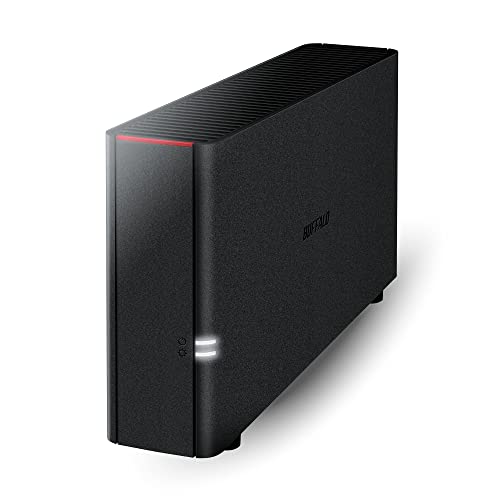
BUFFALO LinkStation 210 2TB 1-Bay NAS
Best for: simple home network backups with included storage
- Drive Bays
- 1-Bay
- Included Storage
- 2TB
- Intended Use
- Home Users
- Dimensions
- 9.45 × 3.31 × 8.67 inches
- Weight
- 2.43 pounds
The Buffalo LinkStation 210 is a single-bay network attached storage unit designed for home users. You receive a pre-installed 2TB hard drive ready to connect directly to your router. It provides centralized backup, folder access restrictions, and SSL-encrypted file transfers. You also get bundled PC backup software and NAS Navigator utility support for Windows and macOS 15 or earlier.
Pros
- Includes a pre-installed 2TB hard drive
- Closed operating system with SSL encryption for file transfers
- Includes PC backup software and NAS Navigator utility
- Supports custom folder access permissions
Cons
- Single drive bay limits physical drive redundancy
- macOS compatibility capped at macOS 15 and earlier
- Closed system does not support third-party applications
Good fit if
- You need an entry-level home backup drive with 2TB storage included out of the box.
- You run Windows or macOS 15 and earlier.
- You want basic folder permission controls without managing third-party add-ons.
Skip if
- You require multi-drive hardware fault tolerance or expansion beyond one bay.
- You use an operating system newer than macOS 15.
- You want to install third-party applications on your storage device.
Verdict: Buffalo LinkStation 210 2TB 1-Bay NAS delivers simple, pre-configured 2TB network storage with automated PC backup for basic home environments. Its single-bay architecture and specific operating system compatibility make it suitable strictly for straightforward local file sharing.

Synology RackStation Storage Expansion Enclosure
Best for: expanding Synology RackStation storage capacity
- Included Storage
- Diskless
- Dimensions
- 25.4 × 17 × 3.46 inches
- Weight
- 28 pounds
View on Amazon: Synology RackStation Storage Expansion Enclosure
This is a diskless expansion unit for Synology RackStation systems. It adds twelve drive bays to your existing setup. The unit measures 17 inches wide and weighs 28 pounds. You can expand your storage volume online without downtime. It is managed through the Synology DiskStation Manager software. This device suits users who need to scale their rack-mounted storage capacity significantly.
Pros
- Adds 12 drive bays for massive capacity growth
- Allows online volume expansion without system interruption
- Integrates seamlessly with Synology DiskStation Manager
Cons
- Requires purchase of separate hard drives
- Heavy at 28 pounds and bulky in size
- Only works with Synology RackStation systems
Good fit if
- You are expanding a Synology RackStation array
- You need to add significant storage capacity
- You require online volume expansion capabilities
Skip if
- You need a standalone NAS unit
- You are using a non-Synology system
- You want a pre-configured disk drive solution
Verdict: Synology 12-Bay RackStation Expansion is a specialized tool for scaling existing Synology RackStation infrastructure. It fits users who need to add twelve bays to their current setup without downtime.

Synology 2U Rackmount Redundant Power Expansion Unit
Best for: expanding Synology RackStation arrays
- Included Storage
- Diskless
- Dimensions
- 27.4 × 17 × 3.46 inches
- Weight
- 29.5 pounds
View on Amazon: Synology 2U Rackmount Redundant Power Expansion Unit
This is a diskless 2U rack expansion unit designed for Synology RackStation systems. It features redundant power supplies to ensure service uptime during maintenance or failure. You can expand your storage volume online without downtime. The unit measures 17 inches wide and weighs 29.5 pounds. It is managed through the Synology DiskStation Manager interface for seamless integration.
Pros
- Redundant power supplies for high availability
- Online volume expansion without downtime
- Plug-n-use design for easy setup
- Managed via Synology DiskStation Manager
Cons
- Sold diskless with no included drives
- Large 2U form factor requires rack space
- Heavy at 29.5 pounds
Good fit if
- You need to expand existing RackStation storage
- You require redundant power for uptime
- You have a 19-inch rack enclosure
Skip if
- You need pre-installed storage drives
- You are building a desktop NAS
- You lack rack mounting space
Verdict: Synology 2U RackStation Expansion is a specialized hardware add-on for expanding existing Synology RackStation arrays with redundant power. It fits users who need seamless online volume growth and have the physical rack space for a 2U unit.

Synology 4-Bay Rackmount Expansion Unit
Best for: expanding existing Synology NAS capacity
- Drive Bays
- 4-Bay
- Included Storage
- Diskless
- Dimensions
- 17 × 11.4 × 1.73 inches
- Weight
- 9.44 pounds
The Synology RX418 is a diskless expansion unit designed to increase storage capacity for existing Synology NAS systems. It features four drive bays and supports online volume expansion, allowing you to add space without downtime. Measuring 17 inches in length, it fits 2-post racks. The unit includes energy-saving deep sleep mode and is managed via Synology DiskStation Manager.
Pros
- Four drive bays for scalable storage
- Supports online volume expansion
- Fits 2-post and wall mount racks
- Energy-saving deep sleep mode
Cons
- Sold diskless with no included drives
- Requires existing Synology NAS system
- Lacks built-in hard drives
Good fit if
- You need to expand existing Synology storage
- You use 2-post rack mounting
- You want online volume expansion
Skip if
- You need a standalone NAS
- You want pre-installed drives
- You use 19-inch rack mounts
Verdict: Synology RX418 4-Bay Expansion Unit is a practical add-on for users needing more space in their current Synology setup. It fits those who value rack compatibility and seamless expansion over standalone functionality.
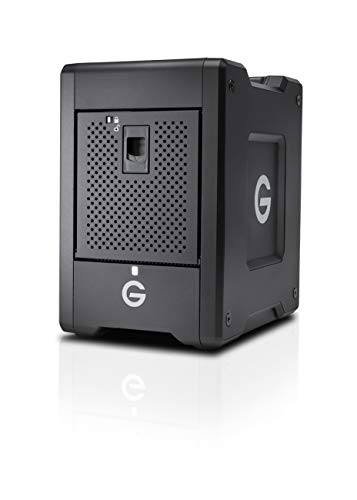
G-Technology 32TB G-Speed Shuttle
Best for: 4K/8K video editing workflows
- Drive Bays
- 4-Bay
- Included Storage
- 32TB
- RAID Support
- 0, 1, 5, 10
- Hardware Interface
- Thunderbolt
- Dimensions
- 9.75 × 6.85 × 10.5 inches
- Weight
- 16 pounds
This 4-bay storage unit holds 32TB of data and connects via Thunderbolt. It features built-in hardware RAID for levels 0, 1, 5, and 10. The design is transportable, weighing 16 pounds. It supports multi-stream 4K and 8K workflows. You should use this if you need high capacity and fast transfer speeds for video production.
Pros
- 32TB storage capacity
- Thunderbolt interface
- Hardware RAID 0, 1, 5, 10 support
- Transportable design
Cons
- No Ethernet port listed
- No Wi-Fi capability
- Heavy at 16 pounds
Good fit if
- You edit 4K or 8K video
- You need Thunderbolt connectivity
- You require hardware RAID
Skip if
- You need a standard NAS
- You require wireless access
- You want a lightweight drive
Verdict: G-Technology 32TB G-Speed Shuttle Thunderbolt 3 fits video editors who need high-speed Thunderbolt transfers and hardware RAID protection for large media files.
Specifications side by side
| Spec | Synology CLP8 8-Camera License Pack | Synology 4 License Pack | Western Digital My Book Live 2TB Personal Cloud NAS | BUFFALO LinkStation 210 2TB 1-Bay NAS | Synology RackStation Storage Expansion Enclosure | Synology 2U Rackmount Redundant Power Expansion Unit | Synology 4-Bay Rackmount Expansion Unit | G-Technology 32TB G-Speed Shuttle |
|---|---|---|---|---|---|---|---|---|
| Drive Bays | not specified | not specified | not specified | 1-Bay | not specified | not specified | 4-Bay | 4-Bay |
| Included Storage | not specified | not specified | 2TB | 2TB | Diskless | Diskless | Diskless | 32TB |
| RAID Support | not specified | not specified | not specified | not specified | not specified | not specified | not specified | 0, 1, 5, 10 |
| Hardware Interface | not specified | not specified | not specified | not specified | not specified | not specified | not specified | Thunderbolt |
| Number of Bays | not specified | not specified | not specified | not specified | not specified | not specified | 4-Bay | 4-Bay |
| Intended Use | not specified | not specified | not specified | Home Users | not specified | not specified | not specified | not specified |
| Dimensions | 5 × 5 × 1 inches | 5 × 5 × 1 inches | 2 × 6.6 × 5.5 inches | 9.45 × 3.31 × 8.67 inches | 25.4 × 17 × 3.46 inches | 27.4 × 17 × 3.46 inches | 17 × 11.4 × 1.73 inches | 9.75 × 6.85 × 10.5 inches |
| Weight | 0.71 ounces | 0.35 ounces | 2.41 pounds | 2.43 pounds | 28 pounds | 29.5 pounds | 9.44 pounds | 16 pounds |
| Size | CLP8 | 4 license | 2 TB | 2TB (1x2TB) | 88 mm x 482 mm x 696 mm | 2U x 24" x 36" | 44 mm x 480 mm x 325 mm | 32TB |
| Color | Multicolor | Multicolor | Black | Black | Black | Black | black | Black |
| Model | CLP8 | CLP4 | WDBACG0020HCH-NESN | LS210D0201 | RX1217 | RX1217RP | RX418 | 0G10077 |
If you also compare specifications for outdoor gear, our longboard buying guide lists board volume and dimensions.
Frequently asked questions
Can I add more cameras to my Synology NAS?
Yes, you can expand surveillance capacity using license packs. The Synology CLP4 and CLP8 allow you to monitor additional IP cameras. These software add-ons extend your system's limits without requiring new hardware purchases. You select the pack size based on how many extra devices you need to connect.
What is the best NAS for simple home backups?
The Buffalo LinkStation 210 is a strong option for basic home environments. It offers 2TB of pre-configured storage with automated PC backup features. Its single-bay architecture makes it suitable for straightforward local file sharing. This unit is designed specifically for home users who need easy setup.
How do I expand my existing Synology RackStation?
You can use specialized expansion enclosures to scale your infrastructure. Options include the RX1217, which adds twelve bays, and the RX418, which provides four additional bays. These units allow for seamless online volume growth. You must ensure your rack has the physical space for these specific 2U or standalone units.
Is there a NAS for video editing workflows?
The G-Technology G-Speed Shuttle Thunderbolt 3 is built for this purpose. It offers 32TB of storage and uses Thunderbolt 3 for high-speed transfers. The 4-bay design includes hardware RAID protection for large media files. This device fits editors who need fast connectivity and robust data security.
What size is the Synology 2U Rackmount Expansion Unit?
The Synology RX1217RP is a 2U rackmount unit with redundant power. It measures approximately 17 inches in width and 27.4 inches in length. The unit weighs 29.5 pounds. You need sufficient physical rack space to install this expansion unit alongside your existing RackStation array.
Can I use the My Book Live for media streaming?
Yes, the Western Digital My Book Live supports home streaming. It is a compact 2TB personal cloud solution designed for dual-platform backups. The unit weighs 2.41 pounds and fits easily in home environments. It serves as a straightforward option if your capacity requirements match its 2TB limit.
Do license packs count as physical hard drives?
No, license packs are software add-ons, not physical drives. The Synology CLP8 and CLP4 packs expand surveillance capacity by allowing additional IP camera connections. You buy these to extend monitoring limits without purchasing new hardware. They do not provide storage space themselves.